
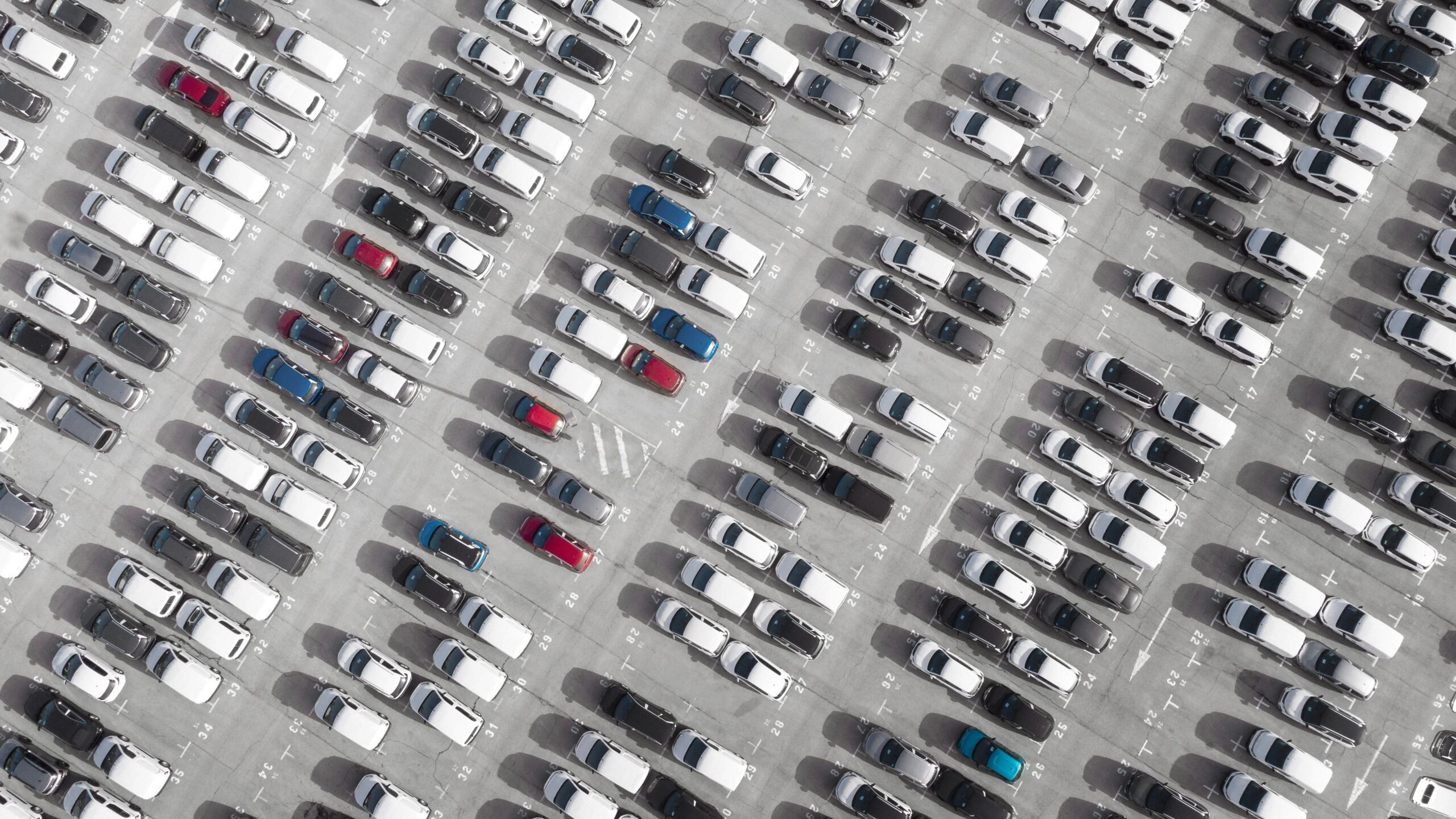
For much of the past year, one message has quietly settled into the industry: used-car inventory in the U.S. is rising again. More listings are appearing. Dealer lots look fuller than they did during the supply-crunch years. On the surface, that feels like relief.
But availability and sell-through are no longer moving in lockstep.
Dealers are discovering a new reality in 2025: just because more used cars are available doesn’t mean more of them will move — at least not quickly, and not at the margins they expect.
This is no longer a market defined by scarcity. It’s a market defined by selectivity.
Yes, used-car inventory is up year-over-year across many U.S. regions. Buyers have more options than they’ve had in years. But what’s changing is how those buyers behave once they start shopping.
Vehicles are sitting longer. Shoppers are comparing more aggressively. Price sensitivity is stronger. And the gap between fast-moving inventory and slow-moving inventory is widening.
In past cycles, volume alone could bail out acquisition mistakes. In 2025, it often can’t.
This is what a balanced market looks like:
And that unevenness is where margin pressure quietly begins.
Demand still exists in the used-car market — but it is far more precise than it was during post-pandemic volatility. Three filters now dominate buyer behavior:
1. Price realism
With average new-vehicle prices still hovering around the $48,000 mark, many buyers are moving down the payment curve. But they are not simply buying anything used. They are searching for value that feels rational — not discounted, just justified.
2. Condition and trust
Buyers are far more informed. Reconditioning quality, service records, clean histories, and ownership transparency matter more than ever. Vehicles without confidence behind them move slowly, no matter how they’re priced.
3. Use-case fit
Fuel-efficient commuters, clean family SUVs, and reliable daily drivers still turn quickly. Niche vehicles, high-maintenance models, and misaligned trims age faster — even in healthy markets.
The result is a new kind of split: demand is alive, but it is narrow. Not all inventory participates equally.
Most dealers still think of used-car risk as a sales challenge. In 2025, it’s increasingly an acquisition challenge.
Auctions remain active. Wholesale pricing still fluctuates. But the margin for error has thinned considerably. Emotional bidding, competitive buying, or speculative stocking now carries heavier downstream consequences:
The danger is no longer finding used cars. It’s finding the wrong ones.
For years, growth meant scale. More units. More listings. More bets.
That equation has shifted.
In a balanced market, advantage comes from precision, not volume. Buying right now means:
Volume alone no longer fixes mistakes. Quality and fit now do the heavy lifting.
While auctions react to the market, the service lane reveals it in advance.
Every service visit represents:
From an inventory standpoint, this changes the game. Service-sourced vehicles tend to arrive with:
Instead of guessing what might retail well, dealers gain early visibility into what already exists in their customer base.
In a market where selectivity defines success, this shift from reactive sourcing to intent-driven sourcing is no longer tactical — it’s strategic.
Used-car inventory will likely remain available. Buyers will likely remain cautious and informed. That combination produces a simple truth:
Dealers who win consistently won’t be the ones with the most cars.
They’ll be the ones with the most movable cars.
Control over source, timing, and quality will quietly outperform raw volume. The advantage will belong to dealers who buy with clarity instead of optimism.
Because in 2025, the hardest part of used-car retail isn’t selling.
It’s buying the right cars in the first place.